Contents
The Figure
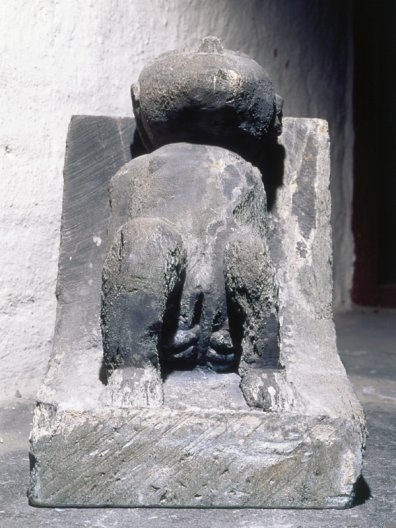
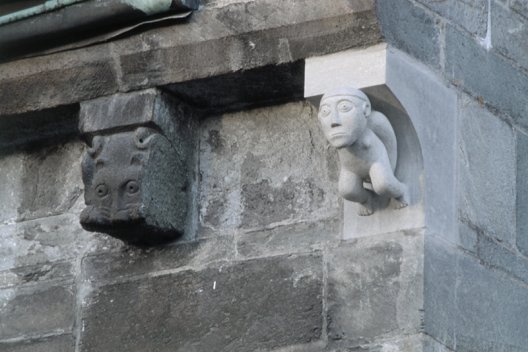
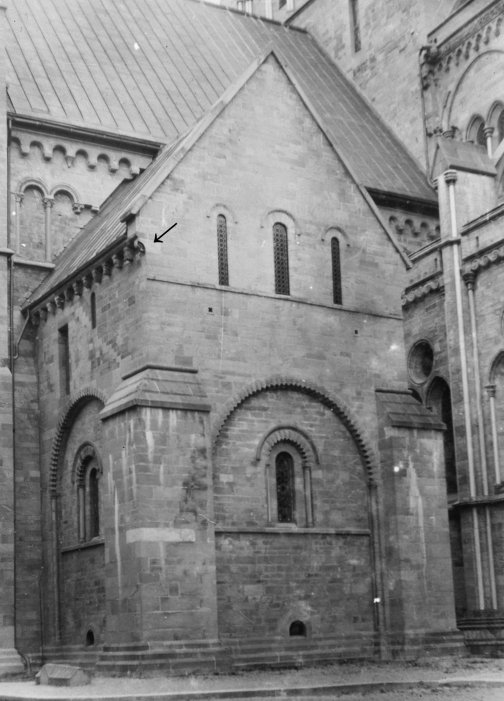
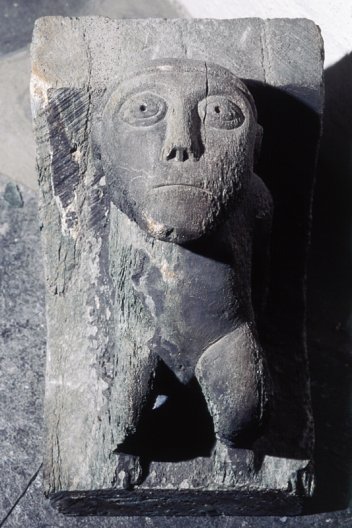
This figure used to reside on the external corner of the South transept of the Nidarosdomen Cathedral in Trondheim, Norway. It was replaced in 1992 with a modern copy and the original is now on display in the Archbishops Palace Museum attached to the cathedral. The sheela was published by Jørgen Andersen in the artcle “Konsollernes verden” in Kunst og Kultur Nr. 1 in 1996. This figure is one of three alleged sheela na gigs in Norway, The other carvings are at Stiklestad and Sakshaug although the Sakshaug carving is somewhat suspect as it appears to be more of a pine cone than sheela na gig. This sheela was in all likelihood carved by an English sculptor as we shall see below.
The History of the Cathedral
King Olaf Haraldsson (also known as Olav) now St Olaf was killed at the battle of Stiklestad in 1030. Tradition has it that the high altar of the cathedral marks the spot where he was buried. In 1031 the King was declared a saint and pilgrims started to visit his grave. Work started on building the first stone church at the site around 1070. This building was commissioned by King Olav the Gentle the nephew of St Olav and it is thought that English craftsmen were employed in its construction. Parts of the cathedral are in the Early English style.
For more information on English influence in the area see the page on Stiklestad.
English and French Influence
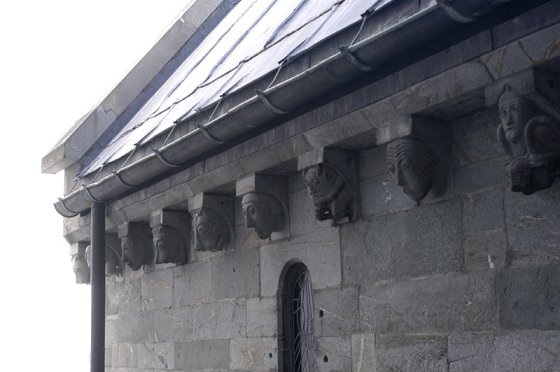
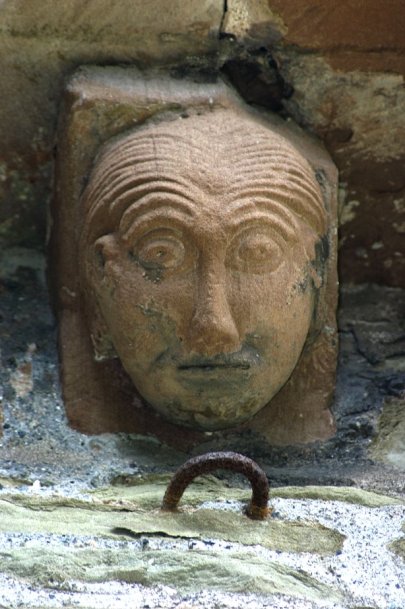
The cathedral bears some striking similarities to Lincoln cathedral which it strongly resembles. The romanesque corbels on the church also seem to be English in origin as can be seen below. A broken dragon head hood terminal now housed in the Archbishops museum is very similar to those found England. It also thought that English masons and artists had a hand in building most of the 20 or so Romanesque churches in the Trondelag area.
The Sheela na gig
As you can see from this angle the figure is unequivocally exhibitionist with one finger seemingly insterted into the vulva. However when viewed from the front which is the angle the corbel is most likely to be seen from it would seem that the vulva would be hidden in shadow. Kjartan Hauglid who supplied the pictures for this page assures me that the exhibitionist nature of the carving is visible from the ground. Nevertheless this figure is definitely one of the more modest sheelas unlike the “megavulvic” examples at Kilpeck and Oaksey.
Being “only visible from below” is a feature of some other sheelas, for instance the ones at Stoke Sub Hamdon and on St John’s at Devizes can only be seen to be exhibitionist from directly below. This begs the question that if figure is not overtly exhibitionist then why are the sexual features present at all? From the photograph below it seems that even when it was newly carved the height of the sculpture and the butress below it would have prevented its exhibitionist nature from being seen. Non overt or overly highly placed sheela na gigs would seem to be detract from the “warning against lust” theory put forward by Anthony Weir and James Jerman. If the figure cannot be seen to be exhibitionist then how does serve as a method of instruction? Conversely these non overt sheelas may be being used in an apotropaic way to avert evil in somewhat more quiet and non obtrusive manner than their more blatant sisters. The figures at Oxford and Stanton St Quintin were and are high up and barely visible from below.
Thanks go to Kjartan Hauglid for supplying the photographs and much of the information about the sheela.
All photos copyright Kjartan Hauglid 1996